
Tokyo Scoring Solo Strings

World-class string soloists, featuring industry-leading legato and unparalleled workflow.
$249


Audio Demos
- Colors In The Night Tremendouz
- Les etoiles sur le Temple de Est Charlotte Trapasso
- Perdition Vae Song
- Little Navigators Jeff Ball
- Genshin-Impact - Combat Beneath the Waves Yu-Peng Chen (Arranged by Jason Pai)
- Communion Sarah Mancuso
- The City Under a Spell Nilla Haye
- Village Theme Hew Wagner
- Quamobrem Yuki Kaijura (Arranged by DanFourts)
- 光 Hikari Kaedalus
- Equinox Artem Akmulin
- Lament of Loneliness (Library Only) Andreas Wimmer
- Les etoiles sur le Temple de Est (Library Only) Charlotte Trapasso
- Colors In The Night (Library Only) Tremendouz
- The City Under a Spell (Library Only) Nilla Haye
- Village Theme (Library Only) Hew Wagner
- Quamobrem (Library Only) Yuki Kaijura (Arranged by DanFourts)
- 光 Hikari (Library Only) Kaedalus
Overview
An extraordinary collection of solo strings — violins, viola, cello, and contrabass — with the same groundbreaking legato, brilliant workflow, and agility and perfection as our flagship Tokyo Scoring Strings. Excellent as first-chair performers, featured soloists, or to write for string quartet or quintet. Tokyo Scoring Solo Strings is the perfect companion to Tokyo Scoring Strings, but it’s just as effective and inspiring when used as a standalone library.
Note: When you add Tokyo Scoring Solo Strings to your cart, the free Delay Compensator plugin will be automatically added as well. This is an essential plugin that can be used to easily sync your DAW with instruments that use Lookahead, such as TSSS.

Product Info

Five exquisite string soloists
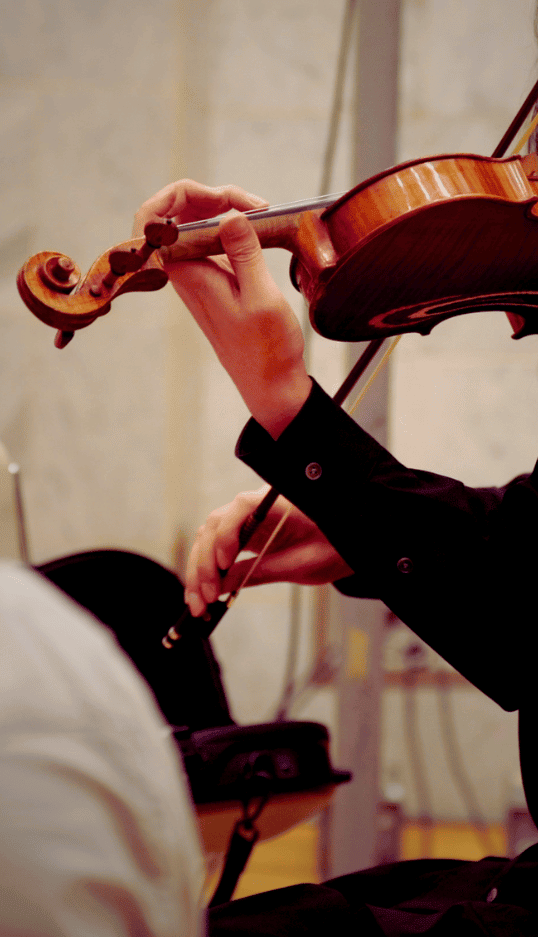
Violin I & II and Viola are all performed by Koichiro Muroya himself, the namesake leader of the ensemble. His hand-picked soloists feature on Cello (Masami Horisawa) and Contrabass (Jun Saito).

Recorded with world-class equipment
Virtuosic playing must be captured with the finest gear: Neumann U87s and U67s, Telefunken U47s, RCA 77-DX, and AEA N8s, along with NEVE, UREI, and Crane Song preamps.

Three detailed mic patches
Choose from the hand-sculpted Anima Mix, crisp Close Pair, or Mic Mixer (build your own with the provided mic signals: Close Pair, Surround, Side, and Back).

All crucial playing techniques
Sustains, pizzicato, staccato, staccatissimo, spiccato, tremolo, trills (whole-tone, half-tone), long & short decrescendo and sforzando.

Expressive, seamless dynamics and vibrato
Up to five dynamics per articulation (pp, mp, mf, f, ff) and beautiful, natural vibrato. Move between dynamics 100% seamlessly with no phasing or doubling effects!

Industry-leading legato
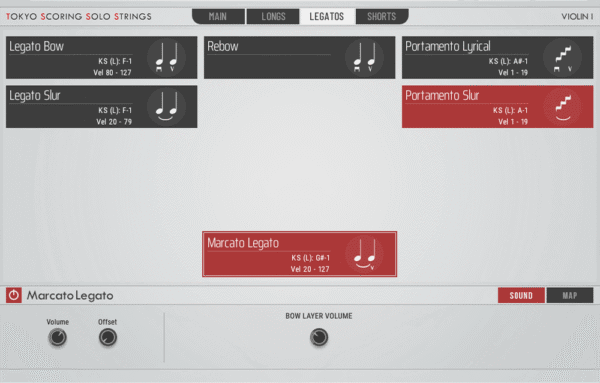
Three distinctive legato types: Legato Bow and Legato Slur (2x round robins each), and powerful Marcato Legato incorporating adjustable bow attack. Two portamento types: Portamento Lyrical and Portamento Slur.
Features

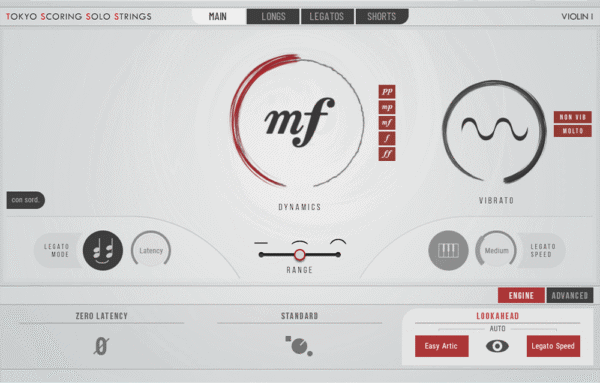
Elegant and streamlined UI

Groundbreaking lookahead mode

Total Articulation Control Technology v3

Deep editing for power users

CONSOLE modular FX rack and mixer
Requirements

120GB disk space
An additional 120GB is required only during installation to store temporary files. Solid state drive recommended. Note that mic positions & mixes can be moved or deleted individually.

8GB of RAM minimum
16GB recommended for loading all sections with the anima mix. 32GB recommended for all sections with the All Mics patch.

Apple M2, Intel i5 or equivalent CPU
A faster CPU with more cores will allow you to play more simultaneous voices.

Kontakt Player 7.8.1+
This library will run in the FREE Kontakt Player.

Kontakt Requirements - Mac OS
Intel Macs (i5 or higher): macOS 11 or later
Apple Silicon Macs (via Rosetta 2 & natively on ARM in Standalone or in hosts that support it): macOS 11 or 12 (latest update)

Kontakt Requirements - Windows
Windows 10 or higher. Intel Core i5 or equivalent CPU. Graphics hardware support for OpenGL 2.1 or higher.
Tutorials
Library Walkthrough
Featured Artists & Composers

Richard Jacques
Marvel's Guardians of the Galaxy, Mass Effect, Overwatch 2, James Bond 007: Blood Stone
"I'm a huge fan of the Ventus Winds series. They feature rare instruments deep-sampled to an incredibly high level of detail. It's so liberating to have such a wide range of articulations & phrases that perfectly capture the nuances and performance style of these instruments... from beautiful to haunting, celebratory to sorrowful. Each is expertly recorded and the sound quality is superb, sitting in the mix with ease. If you want to add authentic world winds to your palette, then look no further."

Ben Prunty
FTL: Faster Than Light, Into the Breach, Subnautica: Below Zero
"I've been using ISW since 2015, and their instruments have shown up in Into the Breach and Subnautica Below Zero, and in nearly all of my solo albums. Shreddage helped me fill in the gaps around my own guitar performances. Super Audio Cart provided some great raw synth sounds for parts of Below Zero. Impact Soundworks is often the first place I go to when I'm shopping for a new project. Everything they make works and sounds great."

Mark Portmann
(Ariana Grande, Luis Fonsi, Celine Dion, Quincy Jones)
"[ISW]'s instruments consistently deliver the sound, feel, and reliability I need to do my best work. Thank you for raising the bar and making tools that inspire."
Tokyo Scoring Solo Strings is a true work of art, from the precisely perfect performances, to the programming and processing that brought it to life through excruciatingly detailed hand-edited work and brilliant technical magic.
The resulting library builds upon the extraordinary lookahead technology and remarkably easy-to-use workflow of Tokyo Scoring Strings and takes its unique sound even further.
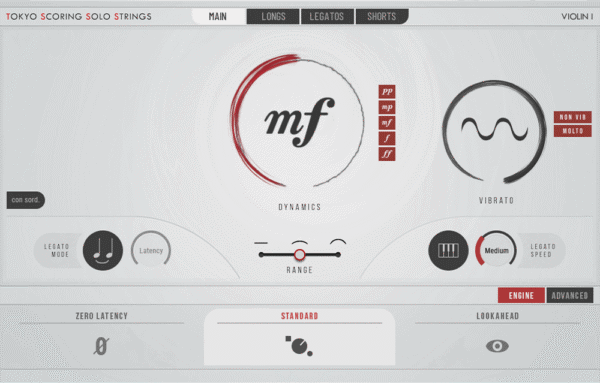
All this effort on our part translates to remarkable ease for you. Sit down to write even complex music and you will find that “it just works” — no need to worry about sample delay or combining articulations manually. Our engine intuits what you’re writing and decides how to play just as a live musician would, resulting in truly realistic, lifelike performances. Of course, you can always interrupt and take greater control at any moment you wish.
Both rapid and expressive passages come to believable life thanks to natural-sounding legato, a mind-reading engine, great care during development, and the masterful playing of Koichiro Muroya and his chosen soloists.
Choose from the following three mic patches per instrument:
- Anima Mix: Our own quintet-style mix derived from the four included microphone positions, similar to the Anima Mix in Tokyo Scoring Strings.
- Close Pair: A stereo pair of close mics for a very dry, upfront sound.
- Mic Mixer: Design your own mix from four individual mic positions.
In a future update, we plan to add mic mixes created by Mitsunori Aizawa himself, using his hardware setup at Sound City.
Individual mic signals in the Mic Mixer patch:
- Close Pair: A stereo pair of close mics that can be used for adding more crisp detail.
- Surround: Mics placed at the front of the stage, pointing backward, to pick up the full surround sound.
- Side: Mics placed at the far left and far right, providing a wider stereo image than the Surround.
- Back: Mics placed at the back of the stage.
Lookahead is the ideal solution to make programming parts in MIDI as realistic and easy as possible. This engine mode, available with a single click, allows you to work directly on the grid with consistent delay for all articulations and legato speeds, and polyphonic legato that works perfectly with no additional effort on your part.
For the ultimate in realism and saving time, you can even choose the optional Easy Artic mode, which selects articulations polyphonically without needing to use keyswitches.
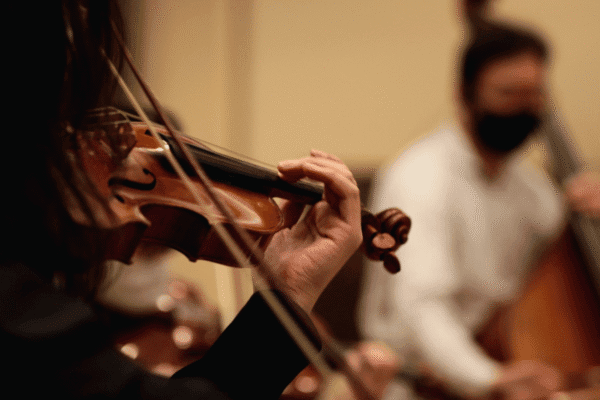
The sound of Japanese strings is both captivating and highly unique. In a solo or small ensemble context, the focused studio space lends itself to more agile playing, and a cultural focus on perfection leads to incredible accuracy. These strengths make Japanese performers excel at both delicate nuance and sweeping emotional performances that move listeners to tears. For many of us who have admired Japanese soundtracks for years, this sound has long been a source of inspiration, but it’s been out of reach for most composers outside of Japan until the arrival of the Tokyo Scoring series.
Our goal with the Tokyo Scoring series is to give you the orchestral string sound featured in so many world-famous Japanese productions. As with Tokyo Scoring Strings, this solo library features performers from Koichiro Muroya Strings, the ensemble heard on many world-renowned soundtracks. Muroya-san himself lends his brilliance to Violins I and II as well as Viola; Cello and Contrabass are performed by section leaders.
Tokyo Scoring Solo Strings features stunningly realistic, consistent, and smooth legato created using our in-house developed Spectral Fusion System. Using proprietary DSP software, editing, and programming techniques, all 60,000+ legato samples have been carefully balanced and matched to all combinations of source and destination notes, including the associated recorded dynamics.
Normally, this processing would be impossible to achieve through any manual process due to the sheer number of samples involved. That’s why legato recording, editing, and programming is by far the most time-consuming part of creating realistic sample libraries, and why results often come up short — lumpy transitions, rapidly-changing timbre from source to destination, a “sucking” effect that makes the recording space sound suddenly lifeless, and more.
The unprecedented, library-wide balance from the Spectral Fusion System does not compromise the versatility or range of legato either; Tokyo Scoring Solo Strings includes a total of three distinct legato and two portamento types along with four independent speed profiles which allow stunning and consistent performances at all dynamics and tempos.
Writing music is a deeply personal act of creation, and your workflow preferences are just as unique. Our TACT system allows you to personalize how you use Tokyo Scoring Solo Strings to suit how you work best, regardless of which DAW you prefer or whether you use a MIDI controller or not. Do you rely on keyswitches, stick to MIDI CCs, set everything by velocity, or use a combination of all three?
If you can dream up the perfect articulation mapping, you can make it real in Tokyo Scoring Solo Strings.
If you already own Tokyo Scoring Strings Complete or Tokyo Scoring Strings Essentials, you automatically qualify for a crossgrade discount on Tokyo Scoring Solo Strings. Log in and check your Personalized Deals for more information.
We are honored to have partnered with an incredible team of musicians and collaborators in Japan:
- Koichiro Muroya Strings, led by Koichiro Muroya. The most in-demand session ensemble in all of Japan. Their exquisite playing can be heard on many of your favorite soundtracks.
- Mitsunori Aizawa, Japan’s top engineer, responsible for mixing and recording hundreds of world-famous scores.
- Sound City, an incredible recording space with over 60 years of history. This choice of studio gives Tokyo Scoring Solo Strings a tighter, more focused sound that lends itself extremely well to more agile playing and mixing with external reverb.
- Renowned anime and film composer Masaru Yokoyama, who brought his experience recording scores around the world through his companies Plugnote and MiracleBus.
- Crypton Future Media and SonicWire, our Japanese distributors who have helped with the project from the very beginning.
Tokyo Scoring Solo Strings features five independently recorded performers (Violin 1, Violin 2, Viola, Cello, Contrabass), suitable as first-chair musicians, featured soloists, or a string quartet or quintet.
Tokyo Scoring Solo Strings includes a well-rounded set of articulations recorded in superb detail. We have paid particular attention to delivering outstanding legato as well as the agility and crisp short notes that are such a strength of Japanese string performers. You’ll be able to easily write and mock-up sweeping melodies, intimate legato, and aggressive agile passages.
Articulations
- Arco (Sustain) – 5 dynamics, 2 vibrato levels (senza, molto)
- Bowed Legato – 3 dynamics, 2x rr
- Marcato Legato – 3 dynamics, 2x rr
- Slurred Legato – 3 dynamics, 2x rr
- Lyrical Portamento – 3 dynamics
- Slurred Portamento – 3 dynamics
- Rebow – 3 dynamics, 5x rr
- Staccato – 4 dynamics, 6x rr
- Staccatissimo – 4 dynamics, 6x rr
- Spiccato – 3 dynamics, 6x rr
- Sforzando – Dotted eighth & dotted quarter lengths, 3x rr
- Decrescendo – Dotted eighth & dotted quarter lengths, 3x rr
- Pizzicato – 3 dynamics, 4x rr
- Tremolo – 3 dynamics
- Trills – 3 dynamics, whole tone and half tone
- Releases – natural, excited, staccato, and decrescendo
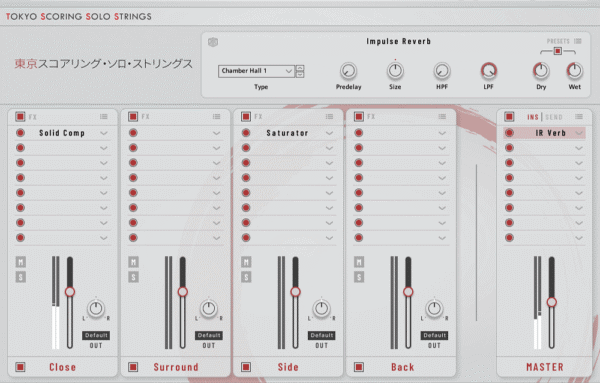
A beautiful version of our Console modular FX rack and mixer is included with Tokyo Scoring Solo Strings. Here, you can access over 40 different analog and digitally-modeled effects ranging from EQs, compressors, and limiters, to multiple flavors of reverbs and delays. You can sculpt and shape Tokyo Scoring Solo Strings entirely in Console without using a single external plugin!
Download the Console manual here to learn more!
Reviews


Testimonial – Hiroyuki Sawano (Attack on Titan, Kill La Kill, Seven Deadly Sins)
“I was curious about TSS because my work friends, Mr. Muroya and Mr. Aizawa were involved in the project. It was recorded in a studio that I often use for my string recording. I have enjoyed using this library as its sound presence and moderate ambience is unique and different compared to overseas recorded libraries that I usually use. I think it can be used effectively in a wide range of genres, not only for epic sounds, but also for rock, pop and dance music.”

Testimonial – Yasunori Nishiki (Octopath Traveler)
“It sounds exactly like what I’m used to hearing, Muroya Strings x Sound City x Mitsunori Aizawa! The staccato and pizzicato reverberation in particular gave me a sense of Sound City’s unique reverb, and I felt like I was in the Sound City control room. The sound definitely has the sense of Japanese strings and studio, making it easy to use for any kind of music. I believe this library delivers the sound of Japan to the world!”

Testimonial – Satoru Kosaki (Lucky Star, Monogatari, Beastars)
“I feel proud that a library made by close representative members of the Japanese soundtrack industry will be released. I played back MIDI data from one of my past compositions which was eventually recorded with the exact same team, and it sounded astonishingly similar. I was also impressed by how easily I was able to produce their sound without having to adjust or mix any details such as the space size, instrument balance, and legato speed, etc. I would absolutely recommend this library to anyone who wants to replicate the sound of Japanese soundtracks, and personally, I feel it will prove to be crucial in my arrangement process as it will be so much easier to imagine the final recorded result.”

Tokyo Scoring Strings – Kevin Kuschel
“But when it comes to smaller section-sized string libraries with a great legato, TSS has become a valid, new contender here that also brings a whole lot of workflow power to the table. If you want that JRPG tone with a smaller, focused ensemble size, for telling musical stories in a big context, then TSS is for you.”
Kevin Kuschel (12/21)

Tokyo Scoring Strings – StrongMocha
“Tokyo Scoring Strings is the answer to any composer’s dreams of having a world-class strings library in their arsenal. It’s also perfect for those who’ve never used such an instrument before because it has everything from deep-sampled playing techniques and expressive scripting that will take care of all the work of creating the perfect sound for you…not limited to just movie soundtracks or anime themes, as they could also fit well with anything from jazz, rock & roll, or even heavy metal!…The library is so much more than I ever could’ve imagined. It does seem like a magical palace, and it’s perfect for people who love to compose and produce.” (5/5 stars)
Thorsten Meyer (StrongMocha)
Tokyo Scoring Strings – Leo Brennaeur
“Tokyo Scoring Strings is probably the only library out there that you can just use without worrying about the articulations that you have to change. You can use the Zero Latency mode if you just want to play it, but if you really want to have the core of this library, use the Lookahead function and it will automatically look ahead of your composition and decide which articulations it will use next. When I found this the other day, I was blown away how good this works.”